
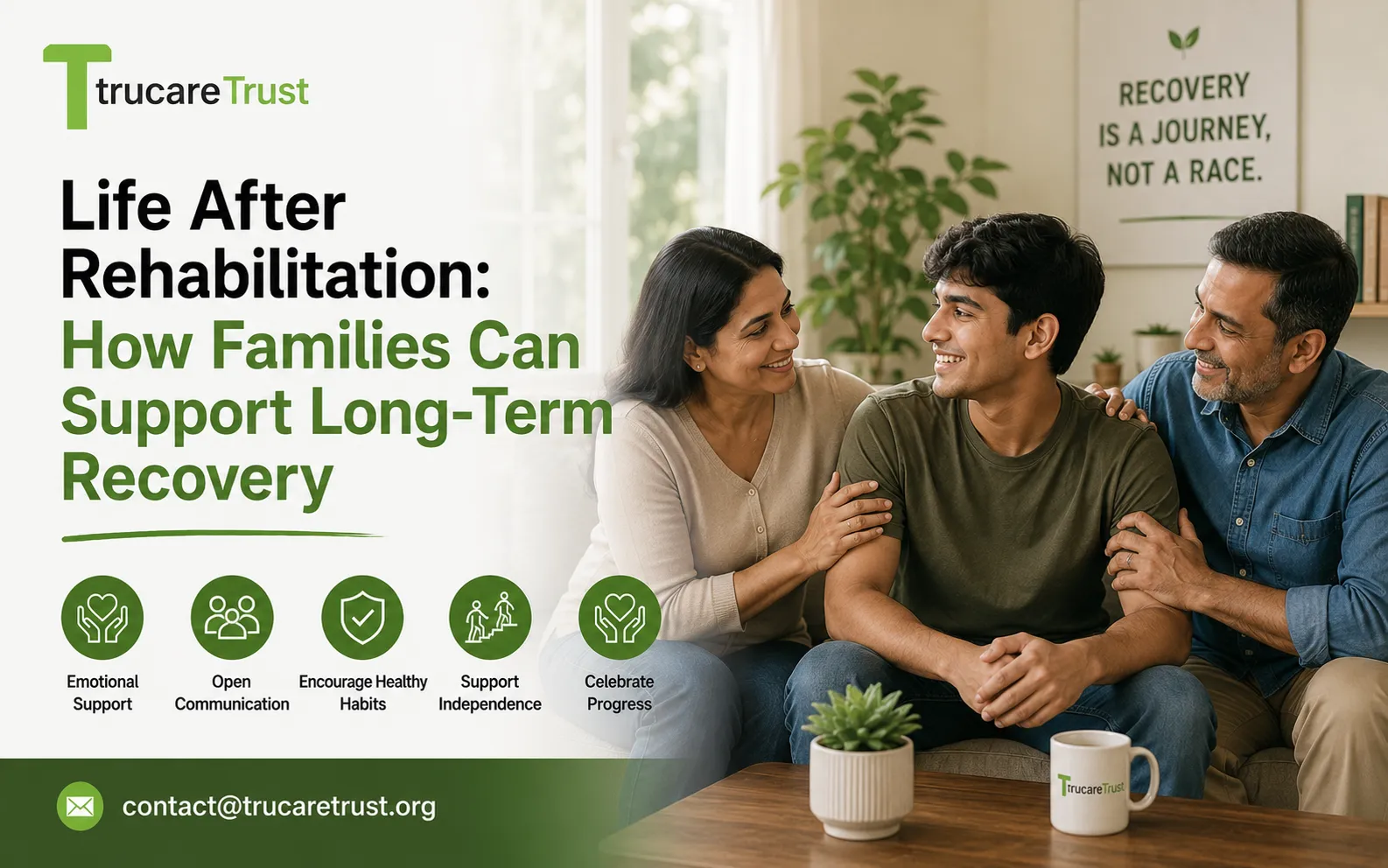
Returning home after residential treatment is a hopeful milestone, but it is not the end of recovery. The structure of a rehabilitation centre in India is replaced by work pressure, family responsibilities, old relationships and familiar triggers. Thoughtful support can make this transition safer without making the person feel watched or controlled.
Follow the Continuing-Care Plan
Discharge instructions may include counselling, psychiatric reviews, prescribed medication, support meetings, health checks and planned daily routines. Families can help with transport, appointment reminders and a calm space for online or in-person sessions. Medicines should not be stopped, reduced or restarted without the prescribing clinician.
Recovery goals should be realistic. Sleep, regular meals, exercise, work and relationships may improve gradually. Expecting immediate perfection can create shame and secrecy.
Small, consistent changes are more sustainable than strict rules imposed during crisis.
Learn the Person’s Warning Signs
Relapse usually develops through a process rather than a single sudden decision. Early signs may include missed appointments, disrupted sleep, isolation, romanticising past substance use, contact with high-risk peers, unexplained money problems or growing irritability.
A family plan should identify whom to call, which clinician to contact and how to respond if these signs appear. A lapse requires prompt assessment and stronger support. It should not be treated as proof that treatment has failed.
The United States National Institute on Drug Abuse has estimated relapse rates for substance-use disorders at approximately 40% to 60%, comparable with other chronic illnesses. This comparison highlights the need for ongoing management, not blame.
Support Without Enabling
Support means listening, encouraging treatment and recognising healthy effort. Enabling includes making excuses, hiding consequences, giving unmonitored cash or paying debts repeatedly without a recovery plan. Boundaries should be specific, calm and consistent.
For example, a family may offer food, transport and treatment costs while declining to provide cash. Consequences should focus on safety rather than revenge. Arguments during intoxication rarely produce useful decisions; immediate medical danger requires emergency help.
Avoid Constant Surveillance
Checking every message, searching belongings without cause or repeatedly questioning the person can damage trust. At the same time, ignoring clear warning signs is unhelpful. Monitoring arrangements, including any substance testing, should be discussed openly and preferably guided by the treatment team.
Confidentiality also continues after discharge. Personal treatment details should not be shared with relatives, neighbours or employers without permission, except where disclosure is legally required or necessary to address immediate danger.
Change the Home Environment
Remove alcohol, non-prescribed sedatives and obvious drug-related items from the home. Avoid celebrations centred on drinking during early recovery. Encourage meaningful activities, but do not overload the person with responsibilities immediately.
Family members may benefit from counselling themselves. Addiction can leave behind fear, anger, financial stress and broken trust. Repair takes time and requires change from everyone involved.
Keep Professional Help Within Reach
Before discharge from a rehabilitation centre in India, families should obtain follow-up dates, medication instructions, emergency contacts and a written relapse-response plan. Continuing care should be adjusted when risks or circumstances change.
Long-term recovery grows through regular treatment, honest communication, useful routines and respectful boundaries. Families cannot complete recovery on another person’s behalf, but steady support can make it easier to seek help early, practise new skills and remain connected to a life beyond addiction.