
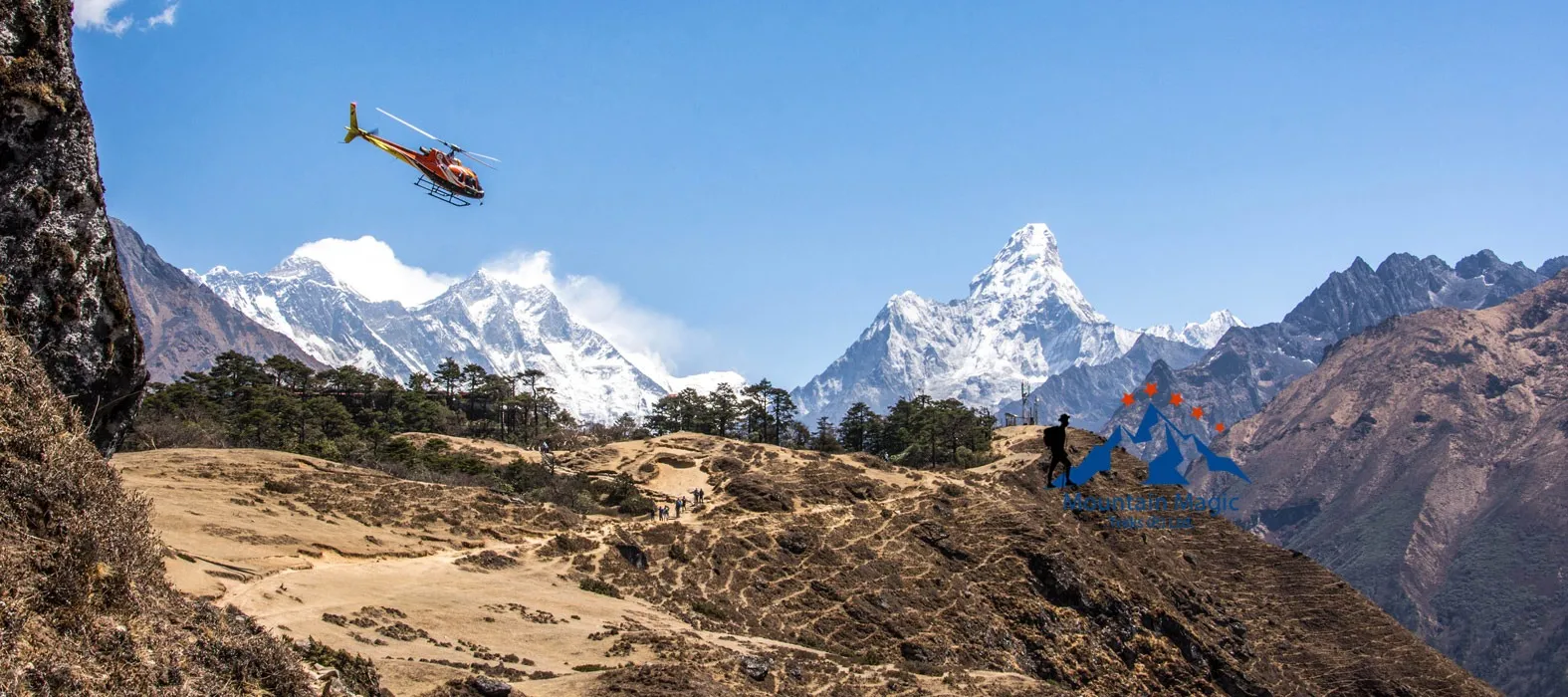
An Everest trek does not become difficult only because of steep climbs.
Sometimes the hardest part is a cold morning when your body feels tired. Sometimes it is a long uphill section that seems to continue forever. Other times, the challenge is simply getting yourself moving when you know there are several hours of walking ahead.
That is the reality of the Everest Base Camp Trek With Helicopter Return.
The helicopter makes the return faster, but it does not remove the demanding part of reaching the high mountains. You still have to walk there.
Knowing how to handle difficult moments can make the entire experience more manageable.
The First Hard Day May Surprise You
Many trekkers arrive in the Everest region feeling confident.
They have trained.
They have good shoes.
They feel ready.
Then the trail starts climbing.
Suddenly, a section that looked easy on a map feels much harder in real life.
That does not mean you are unprepared.
Mountain walking is simply different from normal exercise.
Do Not Panic When Your Pace Drops
Your walking speed may become slower as the altitude increases.
That is normal.
You may need more breaks than you expected. Your breathing may become heavier during climbs.
Instead of fighting this, adjust.
A slower pace that you can maintain is better than walking too fast and exhausting yourself early.
Hills Feel Different at Altitude
A steep climb at home may take twenty minutes.
A similar climb in the Everest region can feel completely different.
The air is thinner at higher elevations, and your body needs to work harder.
This is why the Everest Base Camp Trek With Helicopter Return should be approached as a steady journey rather than a fitness test.
Your goal is not to prove how quickly you can climb.
Your goal is to arrive safely and still have enough energy for the next day.
Your Backpack Can Become a Problem
A bag that feels comfortable for an hour can feel much heavier after several hours.
This is why packing discipline matters.
Before the trek, remove anything you probably will not use.
You do not need to carry your entire room into the Himalayas.
Keep the things you need most accessible:
-
Water
-
Snacks
-
Extra layers
-
Sun protection
-
Personal medication
-
Basic personal items
A well-organized bag can make a surprisingly big difference.
Check Your Straps
Your backpack should sit comfortably on your body.
If the straps are poorly adjusted, your shoulders and back may become uncomfortable long before your legs are tired.
Practice wearing your packed bag during training walks.
It is better to discover a problem at home than halfway through the Khumbu.
Cold Can Make Simple Tasks Annoying
At higher elevations, the temperature can drop quickly.
Taking off gloves to adjust equipment may make your fingers uncomfortable.
Getting out of a warm sleeping bag can require some motivation.
Even filling a water bottle can feel like a chore on a freezing morning.
Prepare for this mentally.
Cold conditions are part of the environment.
Keep your warm layers close instead of buried deep inside your luggage.
When Your Legs Start Complaining
Long walking days can make your legs tired even if you are physically prepared.
The answer is not always another energy drink or a faster pace.
Sometimes the best solution is a short rest.
Sit down.
Drink water.
Eat something if you need it.
Give your muscles a few minutes.
Then continue.
Breaks Should Have a Purpose
Stopping every few minutes may make the journey feel longer.
But refusing to stop when you genuinely need a break can be just as unhelpful.
Find a rhythm.
Walk steadily.
Take sensible breaks.
Then continue.
Your guide can help you find a pace that works for the group.
High Altitude Requires Serious Attention
Physical tiredness is one thing.
Altitude-related symptoms are another.
As you climb higher, pay attention to how you feel.
If you experience unusual symptoms or feel significantly unwell, tell your guide.
Do not hide it because you are worried about slowing the group down.
The mountain is not going anywhere.
Your health comes first.
The itinerary includes acclimatization stops, including time in Namche Bazaar and Dingboche, to help trekkers adjust to increasing elevation.
A Difficult Day Does Not Ruin the Trek
This is an important mental shift.
You may have one day when everything feels difficult.
The weather may be unpleasant.
Your legs may be tired.
The trail may seem endless.
Do not decide that the entire trip is bad because of one afternoon.
Tomorrow can feel completely different.
Mountain travel is full of ups and downs in both the literal and personal sense.
The Final Approach Requires Patience
As you move toward Gorakshep and Everest Base Camp, the altitude becomes a bigger factor.
The landscape also becomes more exposed and rugged.
You may be tired by this point.
That is exactly why rushing makes little sense.
Break the route into smaller goals.
Reach the next bend.
Then the next rest point.
Then the next section.
You do not need to mentally climb the entire mountain at once.
Base Camp Is Not the End of the Physical Challenge
Reaching Everest Base Camp is a major moment.
But depending on the itinerary, Kala Patthar can still be ahead.
The viewpoint reaches about 5,545 meters, making it higher than Everest Base Camp.
This is another reason to conserve energy throughout the trek.
You want to arrive at the major viewpoints able to enjoy them rather than completely exhausted.
The Helicopter Changes the Final Chapter
After the high-altitude walking is complete, the Everest Base Camp Trek With Helicopter Return takes a very different direction.
Instead of walking back through the same valleys for several days, you can return by helicopter.
That can be a huge relief after the physical demands of the trek.
But do not think of the helicopter as something that fixes a difficult day.
It does not.
You still need to complete the demanding route first.
Weather Can Change the Plan
Helicopter flights depend on suitable conditions.
Cloud, wind, and visibility can affect operations.
If the flight is delayed, remain flexible.
A delay is frustrating, but forcing a flight in unsafe conditions would be far worse.
Build some extra time into your overall travel schedule whenever possible.
Mental Strength Matters Too
Physical preparation gets most of the attention before a trek.
Mental preparation is just as useful.
There may be moments when you ask yourself why you decided to do this.
That thought is not unusual.
When it happens, focus on the immediate task.
Drink some water.
Adjust your clothing.
Take a breath.
Walk to the next stop.
You do not need to solve the whole trek in your head.
FAQs
Is the trek physically difficult even with a helicopter return?
Yes. The helicopter changes the return journey, but you still need to complete the high-altitude trekking section on foot.
What should I do if I feel unusually unwell?
Tell your guide immediately. Do not ignore serious or unusual symptoms at high altitude.
How can I make long walking days easier?
Train before the trip, pack carefully, walk at a steady pace, stay hydrated, eat regularly, and use rest breaks wisely.
Is altitude difficult for fit trekkers?
Fitness helps with endurance, but it does not guarantee an easy response to altitude. Acclimatization remains important.
Can bad weather affect the helicopter?
Yes. Weather and visibility can affect helicopter operations and may cause delays or changes.
Conclusion
The Everest Base Camp Trek With Helicopter Return is not difficult because every moment is extreme.
It is difficult because small challenges add up.
Long climbs.
Cold mornings.
Tired legs.
Thin air.
Changing weather.
And the simple need to keep going.
The key is not to fight every challenge.
Adapt to it.
Walk slower when you need to. Rest before exhaustion takes over. Speak up when something feels wrong. Save your energy for the higher sections.
Then, after you have done the hard part on foot, let the helicopter carry you away from the high mountains.
The strongest trekkers are not always the fastest.
They are the ones who know when to push, when to slow down, and when to listen.