
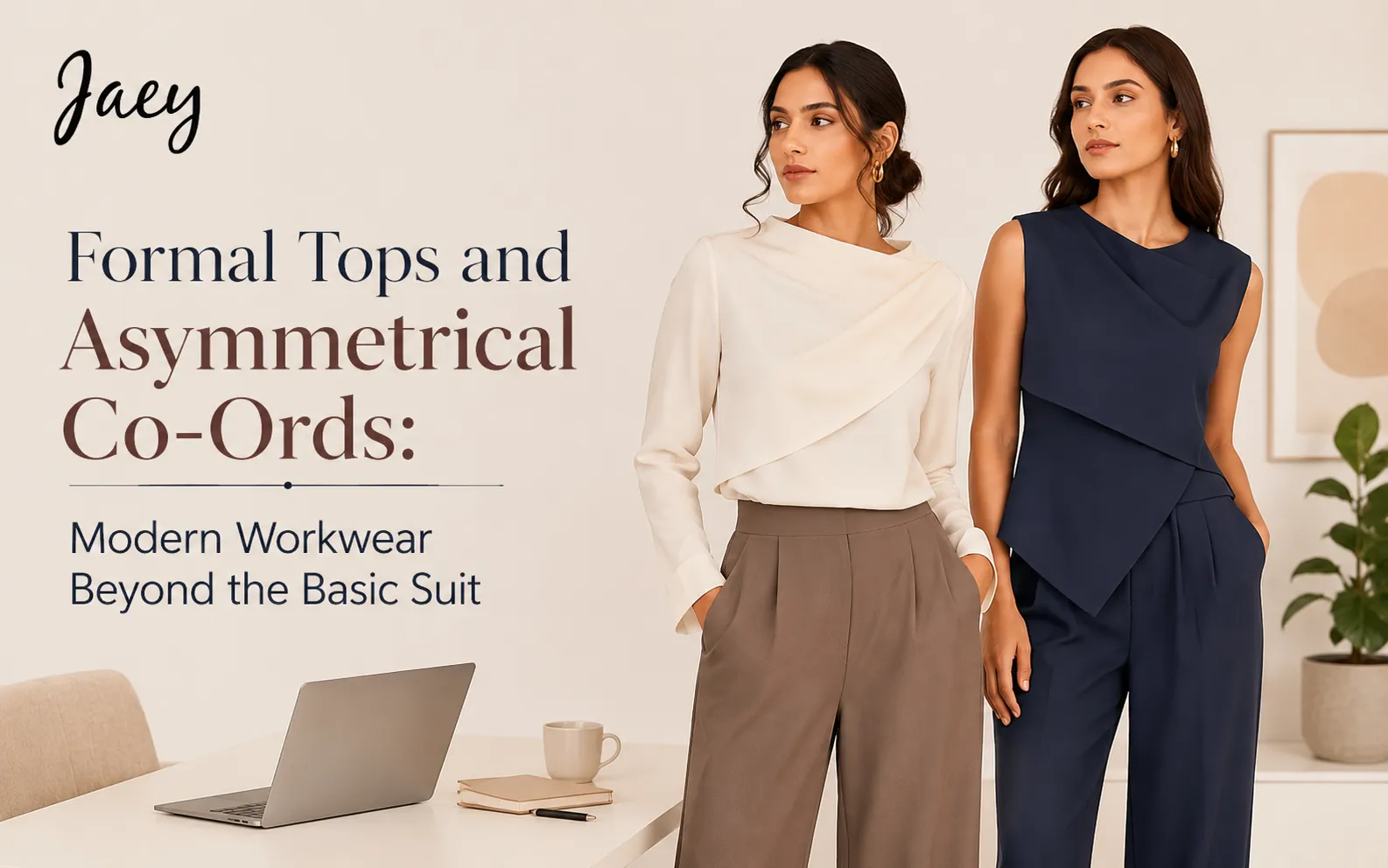
The traditional office suit remains useful, but it is no longer the only way to look professional. Many workplaces now allow a wider range of silhouettes, colours and design details. The challenge is to use that freedom without losing clarity.
Modern workwear works best when one element leads. The rest of the outfit should support it. A shaped top can sit above simple trousers. An uneven set can carry the full look with very little styling.
Rethink what makes a top formal
Good formal tops for women depend less on decoration and more on finish. Clean seams, suitable coverage, stable fabric and a neat neckline often matter more than a standard collar.
A top may include a tie, pleat, wrap or shaped waist. It can still look right for work. The detail needs to remain secure during movement. A wrap neckline should not open while sitting. A tie should not need to be fixed all day.
Length is equally important. A tucked top should have enough fabric to stay in place. An untucked top should end at a point that works with the chosen trouser rise. Test both sitting and standing before deciding.
Use asymmetry as controlled interest
An asymmetrical co ord set changes the familiar matching-set formula. A diagonal hem, uneven overlap or off-centre detail moves the eye and gives the outfit character.
An uneven cut works at the office when it feels planned. Clean fabric and a limited colour palette help. If the cut is already strong, keep other details quiet. Extra ruffles, large jewellery and several bold colours may make the outfit look confused.
The angle should also work with movement. A short side may rise when the wearer sits. An overlap may open during walking. Sit down. Walk. Turn. Then check coverage from the front, side and back.
Match the design to the workplace
A creative agency, design studio or fashion business may welcome stronger shapes. A legal, finance or traditional corporate office may prefer a quieter version of the same idea. This does not require removing personality. It means choosing where to place it.
A subtle asymmetric neckline under a blazer is easier to control than a dramatic handkerchief hem. A solid co-ord is easier to repeat than a high-contrast print. If the workplace has no written dress code, observe what senior colleagues wear during important meetings.
Remote and hybrid work create another need. The upper half of the outfit carries most of the visual weight on video calls. Neckline, shoulder structure and colour near the face become more important than shoe choice.
Fit remains the foundation
Design details cannot rescue poor fit. Shoulder seams should sit correctly. The bust should not pull. Side seams should hang close to vertical. Trousers should allow sitting without the waistband folding or digging in.
Asymmetric garments can make fit problems harder to notice. One side may appear intentionally longer even when the garment is twisting. Check whether the centre back and side seams stay in place.
If alterations are planned, ask whether the design can change without losing its balance. Shortening an angled hem may alter the whole look. Moving a waist detail can do the same. Simple changes are safer when made by a skilled tailor.
Work with colour and texture
One-colour dressing gives unusual shapes a calmer effect. Navy, charcoal, deep green, brown and burgundy can carry asymmetry without feeling loud. Brighter colours can work when the cut and styling remain simple.
Texture offers another route. A matte top with smooth trousers creates quiet contrast. A lightly textured fabric may add depth to a solid outfit. Shiny fabric reflects light and can appear more festive, so it needs careful use in formal settings.
Print should be checked at seams and overlaps. A broken stripe or badly matched pattern can make an otherwise good design look careless. Solid colours are more forgiving when construction is complex.
Make the wardrobe work harder
The top from a co-ord should ideally work with another trouser or skirt. The bottom should support at least one different top. This is especially important when the original set has a memorable shape.
Formal tops can also refresh a set. A plain co-ord trouser may take a crisp shirt on one day and a soft tie-neck top on another. The set stops feeling like a single outfit and becomes part of a working wardrobe.
Care affects repeat wear. Strong hems, folded details and attached ties may need careful washing or steaming. Read the label and inspect how the feature is secured. A loose decorative element can quickly make the garment look worn.
Let the outfit support the person
Modern workwear should not turn the wearer into a display. It should create enough interest to feel personal while allowing skills, communication and confidence to remain central.
Formal tops and asymmetrical co-ords offer useful alternatives to the basic suit. They work best when fit is precise, detail is controlled and the garment suits the setting. A modern silhouette does not need to be loud. It needs to be well judged.